Технические характеристики
[Текст доступен только на английском языке] Year: 2026
Medium: TouchDesigner
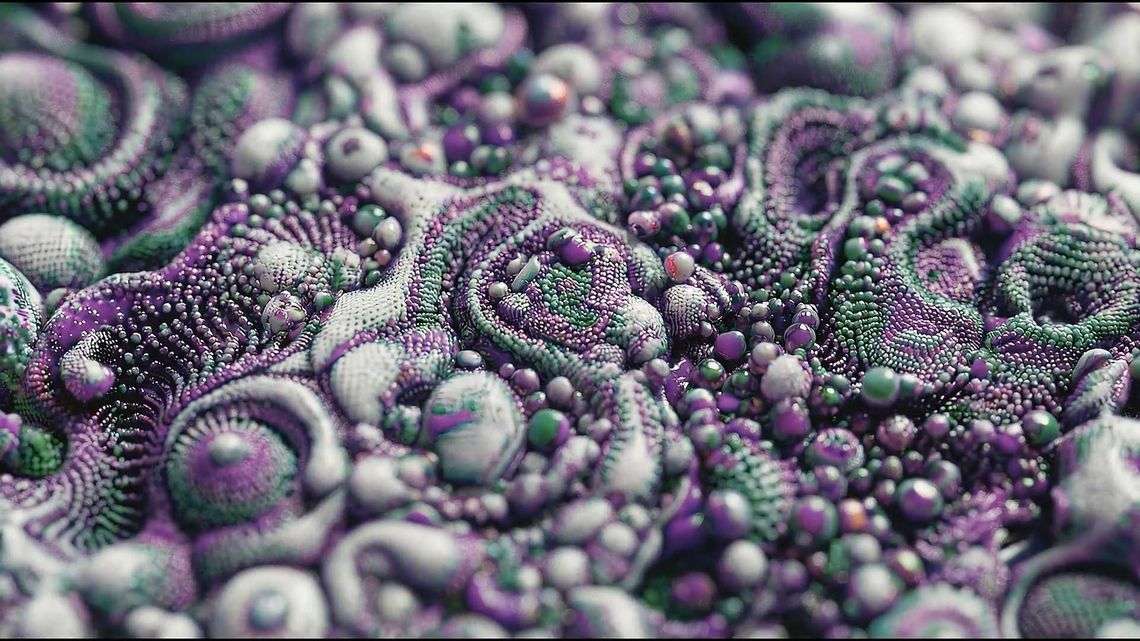
Emergenism explores the idea that complex forms of life, intelligence and organisation can emerge from the interaction of simple elements, without the need for a central authority or predetermined design.
Cities, human brains and forests appear to belong to radically different worlds, yet each can be understood as a complex system produced by countless local interactions. Neurons connect and exchange signals, organisms form ecosystems, individuals generate the constantly evolving structures of a city. At every scale, relatively simple relationships can produce behaviours and structures that could not be predicted by observing their individual components alone.
Emergenism extends this principle to artificial intelligence. Rather than approaching AI exclusively through the familiar opposition between human and machine, the work places biological, social and computational systems within a shared perspective. Intelligence becomes less a property belonging to a single organism or technology than something capable of emerging through networks of relationships, interactions and feedback.
From this perspective, the distinction between what is natural and what is artificial becomes increasingly unstable. The processes through which computational systems develop complex behaviours echo patterns already present throughout biological and social systems: repetition, connection, adaptation, variation and the accumulation of countless small interactions.
The work therefore shifts the question away from whether machines will eventually imitate or replace human beings. Instead, it asks us to recognise a deeper continuity between different forms of complexity and intelligence. Humans, ecosystems, cities and artificial systems do not become equivalent, but they can be observed through a common principle: complex structures emerging from relationships that no individual component entirely controls.
Emergenism proposes this hidden process as a way of reconsidering our relationship with artificial intelligence — not simply as something external that humanity has created, but as another manifestation of our persistent drive to build increasingly complex systems from simple rules, connections and interactions.